* All product/brand names, logos, and trademarks are property of their respective owners.
Tension in the Middle East has a way of spreading far beyond the front lines. Even in places that appear calm and untouched, the ripple effects can be felt in subtle but meaningful ways. That’s exactly what many residents and expats are starting to notice in Dubai.
At first glance, life in the city looks unchanged. The skyline is as busy as ever, businesses are open, and tourists continue to arrive. But behind that sense of normalcy, there’s a growing awareness that regional conflict could shift things quickly. Conversations have changed. People are paying closer attention to the news. And for many, especially foreign workers, there’s a quiet question in the background: what happens if things escalate?
The Dubai war impact isn’t about visible disruption—at least not yet. Instead, it’s showing up in more indirect ways: job uncertainty, cautious spending, and a slightly more tense atmosphere across industries. For expats, particularly those from countries like Pakistan, the situation carries added weight, as livelihoods, remittances, and long-term plans are closely tied to stability in the UAE.
This article looks beyond headlines to explore what’s really happening on the ground—what’s changing, what isn’t, and what it means for everyday life in Dubai right now.
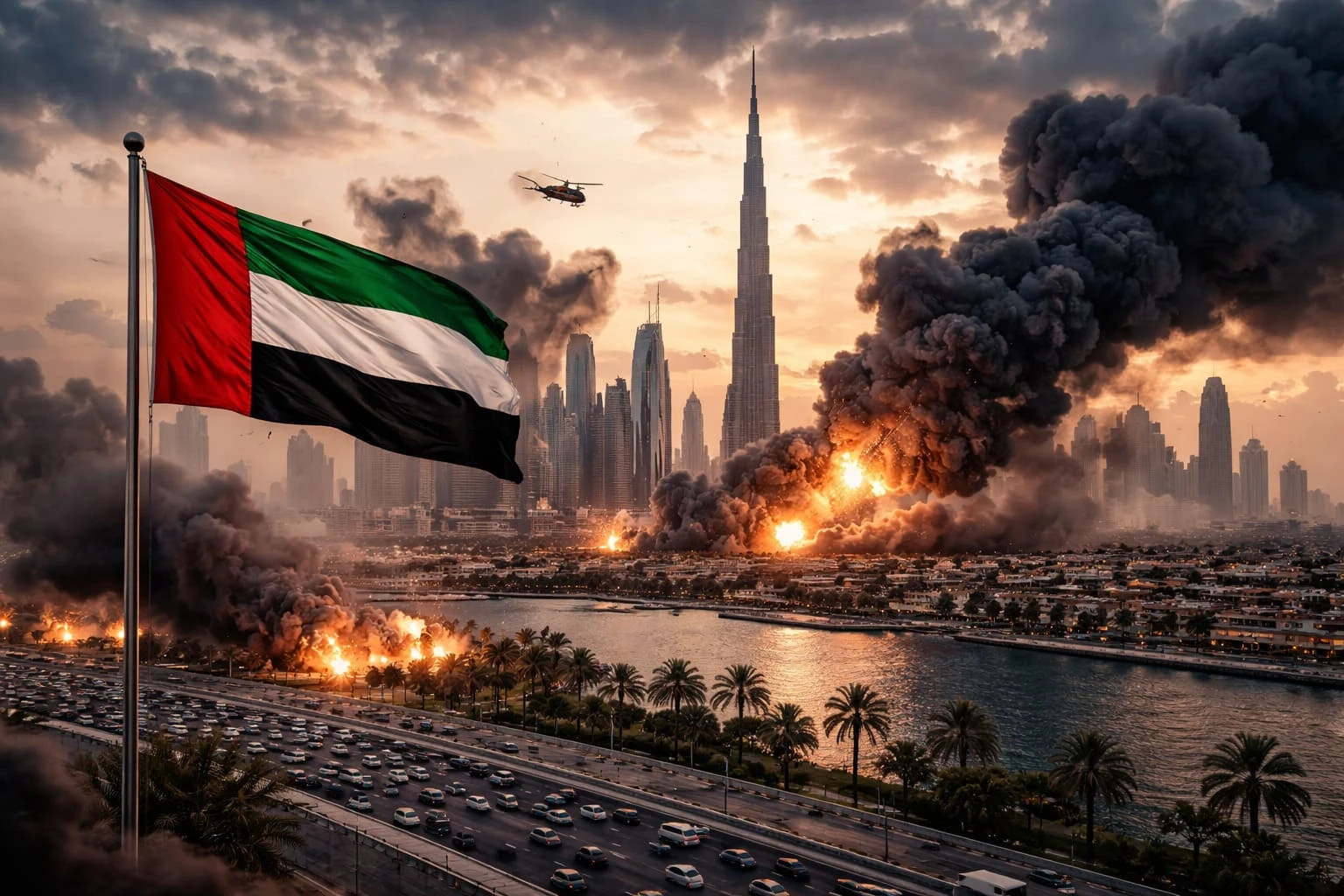
The tension around the UAE is not coming from inside Dubai itself. It is being driven by a wider regional conflict that has pulled Gulf countries into a more alert and defensive posture. In early April 2026, UAE authorities confirmed that air defence systems intercepted incoming missiles and drones, and residents in places including Dubai received emergency alerts before officials later said normal activity could resume. That alone shows why anxiety has risen, even in a city that still looks calm on the surface.
Another reason the pressure feels more serious is Dubai’s strategic position. The UAE sits at the center of Gulf trade, aviation, finance, and logistics. When conflict affects regional airspace, shipping routes, or investor confidence, Dubai becomes part of the conversation immediately, even if daily life is not fully disrupted. Recent reporting has also pointed to concern around the Strait of Hormuz and the broader economic fallout of a fragile ceasefire, which matters because the UAE’s economy is deeply connected to regional stability.
What makes this moment different is the contrast between public calm and real caution. On the ground, Dubai is still functioning. But officials have urged people to follow verified updates, avoid rumours, and stay prepared as the situation evolves. That creates a strange atmosphere: not open panic, but a clear sense that the region is under pressure and that people are watching events more closely than usual.
Walk through Dubai today, and nothing immediately signals a city under tension. Malls are busy, offices are running on schedule, and public life continues without visible disruption. For many residents, daily routines haven’t changed dramatically. But beneath that normal flow, there’s a noticeable shift in awareness. People are paying closer attention to regional developments than they were just weeks ago. News alerts are checked more often, and conversations—whether at work or among friends—have started to include “what if” scenarios.
Dubai has always been built on stability and confidence, and that hasn’t disappeared. Businesses are still operating, events are still happening, and infrastructure is functioning as expected. However, many companies are becoming more cautious behind the scenes—reviewing contingency plans, slowing down major decisions, or keeping a closer eye on regional risks.
Authorities in the UAE have taken a proactive stance. Emergency alert systems, increased monitoring, and visible preparedness have reassured residents that the government is not taking any risks lightly. Even when incidents occur, the response has been quick and controlled, which helps maintain public confidence.

One of the biggest drivers of tension isn’t what people see—it’s what they read and hear. Social media, in particular, has amplified fear, often making the situation seem more immediate or dangerous than it actually is on the ground. In reality, Dubai remains stable, but the constant flow of updates can create a sense of urgency that doesn’t always match everyday experience.
This contrast—between a city that looks normal and a region that feels uncertain—is what defines Dubai right now. Life hasn’t stopped, but people are no longer taking stability for granted.
For Pakistani expats, the situation feels more personal than political. While Dubai remains stable, the uncertainty around the region directly affects how people think about their jobs, income, and plans.
A large number of Pakistanis in the UAE work in sectors like construction, transport, retail, and services—industries that are sensitive to economic shifts. Even a small slowdown can create worry.
Right now, most people are still employed, but there’s growing concern about:
For many workers, the fear isn’t immediate job loss—it’s the lack of clarity about what comes next.
For Pakistani families, income from the UAE is often a major financial lifeline. When uncertainty increases in Dubai, it creates pressure back home as well.
Some expats are:
Within the Pakistani community, the mood is mixed. There is definitely concern, especially among lower- and middle-income workers. Conversations often revolve around:
At the same time, many are choosing to stay calm and wait. Dubai has a strong track record of stability, and that gives people some confidence.
Another layer of concern is tied to visa status and long-term security. If economic conditions tighten, workers worry about:
For newer arrivals or those on short-term contracts, this uncertainty feels even heavier.
Overall, Pakistani expats are not rushing to leave—but they are watching the situation closely. For them, the Dubai war impact isn’t about headlines—it’s about livelihood, responsibility, and the balance between risk and opportunity.

For most people in Dubai, daily life has not been turned upside down. Offices are open, public transport is running, and the city still looks active and polished. But that does not mean nothing has changed. The biggest shift is psychological: people are more alert, more news-aware, and more likely to think about safety in ways they usually would not. Recent government alerts and official safety guidance have made the regional crisis feel real, even for residents who have not seen visible disruption around them.
The mood in Dubai is better described as cautious than fearful. Residents are checking their phones more often, talking about regional developments at work, and paying attention to official instructions. That sense of caution has been reinforced by emergency phone alerts sent to residents and visitors, which made many people realise that even a stable city like Dubai is not fully insulated from events in the wider Gulf.

In many workplaces, routines continue as normal, but with an added layer of contingency planning. Some employers are reviewing emergency procedures, discussing remote work options if needed, and keeping staff updated on official announcements. This does not mean a full business shutdown is happening. It means companies are trying to stay prepared without creating panic. That kind of quiet preparedness is now part of everyday working life in Dubai.
The clearest visible change has been around public guidance. Authorities have urged residents to remain calm, follow official channels, and respond properly to alerts. That has made safety awareness more practical than before. People are thinking more about where they are, how quickly they can get home, and which updates are real versus exaggerated online. In that sense, daily life is still functioning, but it is functioning with a higher level of public vigilance.
The situation around Dubai right now is best understood as tension without disruption. The region is facing real pressure, and recent events have made that impossible to ignore. But inside the city, life continues—just with a sharper sense of awareness.
The Dubai war impact isn’t showing up in dramatic ways like shutdowns or instability. Instead, it’s being felt quietly—in cautious business decisions, in how people think about their jobs, and in the conversations happening across expat communities. For Pakistani workers, especially, the concern is less about immediate danger and more about long-term security, income, and responsibility back home.
At the same time, Dubai’s core strengths remain intact. Strong governance, economic resilience, and a focus on stability are keeping the system steady even as the region faces uncertainty. That balance—between external tension and internal control—is what defines the current moment.
For residents and visitors, the most practical approach is simple: stay informed, rely on official updates, and avoid reacting to panic-driven narratives. Dubai is not immune to regional events, but it is far from unstable.

Feroza Arshad is a writer and content creator covering a range of subjects including news and current affairs, automobiles, sports, technology and coding, digital marketing, and Google and search trends. Her work appears across several blogs and publications. She focuses on clear, well-researched, and genuinely useful writing — breaking down developments, reviewing products, and explaining technical topics in plain language anyone can follow.
When patience runs out and diplomacy fails, the guns speak.Pakistan's most consequential military op
2 May 2026
A sudden earthquake sent waves of panic across Islamabad and Rawalpindi, forcing residents to rush o
18 April 2026
Pakistan’s electricity crisis in 2026 is no longer just a headline — it’s part of
15 April 2026
Be the first to share your thoughts
No comments yet. Be the first to comment!
Share your thoughts and join the discussion below.