* All product/brand names, logos, and trademarks are property of their respective owners.
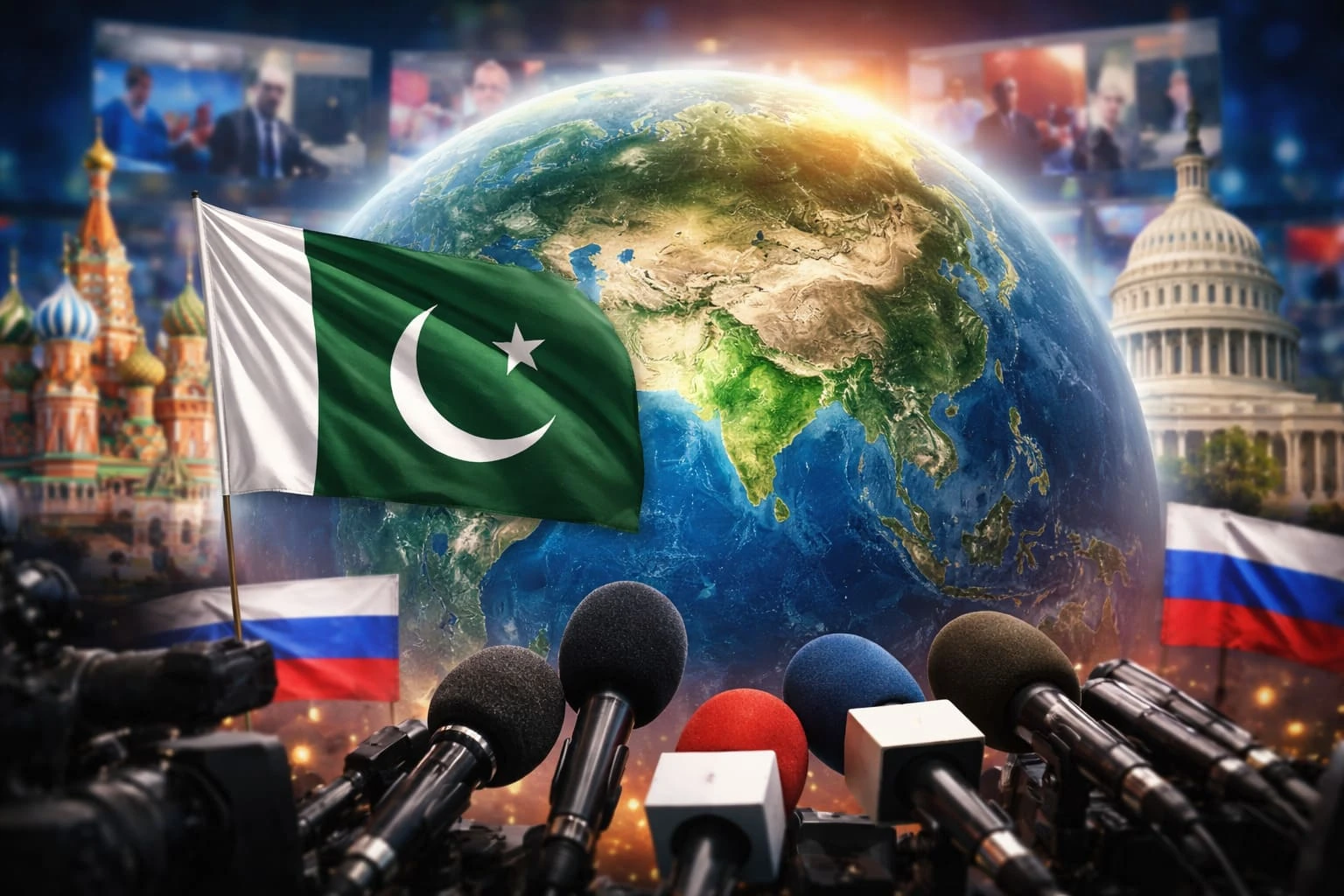
The recent Russia ceasefire has quickly become one of the most talked-about global developments, drawing attention from governments, analysts, and media outlets around the world. While the focus is naturally on Russia and the broader conflict, another country has quietly entered the conversation, surprisingly—Pakistan.
Over the past few days, Pakistan has been mentioned more frequently in international discussions, raising an important question: why now? For many observers, this shift feels unexpected. Pakistan has not traditionally been seen as a central player in European conflicts, yet its name is appearing in diplomatic conversations, expert analysis, and global headlines tied to the ceasefire.
The answer lies in a mix of evolving geopolitics, strategic positioning, and Pakistan’s growing ability to engage with multiple global powers at once. As alliances shift and countries look for neutral or balanced partners, Pakistan’s role—whether direct or indirect—has become harder to ignore.
Understanding why the world is talking about Pakistan after the Russia ceasefire isn’t just about one event. It offers a glimpse into how global influence is changing—and where Pakistan might fit in that future.
As of April 10, 2026, the clearest Russia-related ceasefire development is a short Easter truce in Ukraine.
According to reporting on the Kremlin announcement, President Vladimir Putin declared a 32-hour ceasefire tied to the Orthodox Easter period, with the pause intended to run from Saturday afternoon through Sunday. Ukraine’s side signaled caution, especially because previous holiday truces have broken down quickly, and both sides have accused each other of violations in the past.
That matters because even a brief ceasefire in the Russia-Ukraine war gets immediate global attention. The conflict remains one of the world’s biggest security crises, so any pause in fighting is watched closely by governments, markets, diplomats, and newsrooms. Even when such truces are temporary or fragile, they reopen the same big questions: who is pushing for calm, who is trying to mediate, and which countries may gain diplomatic influence from the moment.

There is also an important reality check here. Right now, Pakistan’s most visible diplomatic attention appears to be linked more directly to the recent U.S.-Iran ceasefire talks in Islamabad than to the Russia ceasefire itself. Multiple reports say Pakistan has been hosting or facilitating ceasefire diplomacy in the Middle East, which has sharply raised its international profile this week. So while the Russia ceasefire provides the wider backdrop of global ceasefire politics, Pakistan’s sudden prominence is being driven more by its active role in regional mediation closer to home.
So if Pakistan isn’t directly central to the Russia ceasefire itself, why is its name suddenly appearing in global conversations?
The answer lies in timing and visibility. Right now, multiple geopolitical events are unfolding simultaneously, and Pakistan is actively involved in one of them. As ceasefire discussions—whether in Ukraine or the Middle East—start dominating headlines, countries that are seen as bridges between opposing sides naturally gain attention. Pakistan fits that description more than it did a few years ago.
One key reason is its increasing diplomatic activity. Hosting or facilitating talks, especially involving sensitive conflicts, immediately puts a country on the global radar. Even if the Russia ceasefire is geographically distant, the broader narrative becomes:
Which countries are capable of helping reduce tensions anywhere in the world? Pakistan is now being included in that conversation.
Another factor is media amplification. Once major outlets begin mentioning Pakistan in the context of diplomacy or ceasefire efforts—regardless of the region—other publications follow. This creates a ripple effect where Pakistan appears more central to global stability discussions than before.
There’s also a shift in how Pakistan is being viewed. Instead of being seen only through a regional lens, it’s increasingly being framed as a potential diplomatic player with a wider reach. That perception alone is enough to trigger global attention, especially during moments like a Russia ceasefire, when the world is actively looking for signs of negotiation and peace-building.
In short, Pakistan is in the spotlight not because of a single event, but because it is positioned at the intersection of multiple global conversations about conflict and resolution.
Pakistan’s presence in global conversations right now isn’t случай—it reflects a gradual shift in how the country is positioning itself on the world stage. Over time, Pakistan has built a profile that allows it to stay connected with multiple power centers, which becomes especially valuable during moments of conflict and negotiation.
Pakistan sits at a geopolitical crossroads. It connects South Asia, Central Asia, the Middle East, and China. This location alone makes it strategically important, but what strengthens its position further is its diverse set of relationships.
Pakistan maintains close ties with China, has a complex but ongoing relationship with the United States, and holds influence within the Muslim world through platforms like the OIC. At the same time, it has kept communication channels open with countries like Russia. This ability to engage across blocs gives Pakistan a kind of diplomatic flexibility that many countries don’t have.
This isn’t the first time Pakistan has played a role in sensitive situations. It has been involved in:
These experiences matter. They build credibility over time, even if the outcomes aren’t always perfect. When new conflicts emerge, countries with a history of engagement are more likely to be considered part of the conversation.
Perhaps Pakistan’s biggest advantage right now is its balanced positioning. It is not fully aligned with one global camp, which allows it to speak to multiple sides without appearing overly biased.
In today’s world, where competing alliances shape many conflicts, countries that can maintain neutrality while still being connected become valuable. They can host talks, pass messages, or provide a platform where dialogue can begin. That’s exactly why Pakistan is gaining attention. It represents something the global system often lacks—a country that can stay involved without being locked into one side.
As Pakistan’s name begins to surface more often in discussions around ceasefires and diplomacy, reactions from around the world have been mixed—but noticeably more attentive than before.
In Western media, the tone is generally cautious but curious. Analysts are starting to acknowledge Pakistan’s ability to stay connected with multiple global players, especially at a time when traditional diplomatic channels are under strain. While there is still some skepticism rooted in past perceptions, there’s also a growing recognition that Pakistan could serve as a useful intermediary in complex situations.

Across the Middle East and broader Muslim world, the response has been more openly positive. Pakistan is often seen as a country that can represent shared interests while maintaining strong bilateral ties. Its involvement in any form of peace effort—direct or indirect—tends to be viewed as a constructive step toward stability.
In regional circles like South Asia, the reaction is more nuanced. Neighboring countries are closely watching how Pakistan’s rising diplomatic visibility might reshape regional influence. There’s an understanding that if Pakistan continues to gain global attention in peace-related efforts, it could shift the balance of how the region is perceived internationally.
Another important shift is happening in global narratives. Pakistan is slowly being discussed less in terms of internal challenges and more in terms of its external role and potential. That change in framing matters. It signals a transition from being seen primarily as a regional actor to being considered part of broader global conversations.
This moment could give Pakistan a real diplomatic opening. In late March and early April 2026, Islamabad hosted and joined a series of high-level consultations with countries including Saudi Arabia, Türkiye, Egypt, Jordan, Qatar, the UAE, and China, all centered on regional peace and de-escalation.
There may also be economic upside, at least indirectly. A stronger diplomatic profile can improve investor confidence when it is paired with signs of macroeconomic stability. Pakistan’s official IMF country page shows projected 2026 real GDP growth around 3.2 percent, while the IMF’s recent review noted stronger-than-expected growth in FY25, improving external balances, and continued reserve rebuilding. The World Bank has likewise emphasized the need for durable private-sector growth and resilience. None of that guarantees a breakthrough, but it does mean Pakistan is entering this moment from a steadier position than during its most acute recent crises.
Still, the risks are just as real. Diplomatic visibility raises expectations. If Pakistan wants to convert this attention into long-term influence, it will need consistency, credible follow-through, and domestic stability. Otherwise, global headlines will fade as quickly as they arrived. So the real opportunity here is bigger than one ceasefire cycle: Pakistan has a chance to turn short-term relevance into longer-term strategic weight.
At first glance, this may look like one of those short-lived geopolitical moments that dominate headlines for a few days and then disappear. But Pakistan’s growing visibility matters for a bigger reason: it suggests that the map of global influence is becoming more flexible.
For years, the same handful of countries were seen as the main drivers of diplomacy in major conflicts. That is starting to shift. As global crises become more complex, countries that can speak to different camps, host sensitive talks, or stay diplomatically useful without taking an extreme position are becoming more valuable. Pakistan is now entering that space.

This also matters because perception shapes power. Once a country is repeatedly seen as relevant in moments of negotiation, its voice begins to carry more weight. That can lead to more invitations, more strategic partnerships, and more chances to influence outcomes beyond its immediate region.
There is also a long-term regional angle. If Pakistan continues to be viewed as a country that can contribute to de-escalation, it could strengthen its standing not just globally but across South Asia and the Muslim world. That would give it a broader platform in future crises, trade discussions, and diplomatic forums.
The global attention around Pakistan after the Russia ceasefire isn’t happening in isolation—it’s the result of timing, positioning, and a shifting geopolitical landscape. While the ceasefire itself may be temporary, the conversations it has triggered are revealing something more lasting: Pakistan is being noticed differently.
What stands out is not just Pakistan’s presence in headlines, but the reason behind it. A combination of active diplomacy, balanced international relationships, and growing engagement in regional peace efforts has placed the country in a position where it can no longer be overlooked. Whether directly involved or part of the broader diplomatic environment, Pakistan is now being discussed as a country that can contribute to dialogue and de-escalation.
At the same time, this moment comes with expectations. Global attention can open doors, but it also brings scrutiny. The real test will be whether Pakistan can build on this visibility and turn it into a consistent, meaningful influence on the world stage.
For readers, the takeaway is simple: when the world starts talking about a country in the context of peace and diplomacy, it signals change. In Pakistan’s case, this could be the beginning of a more active and recognized global role—one that extends far beyond a single ceasefire.

Feroza Arshad is a writer and content creator covering a range of subjects including news and current affairs, automobiles, sports, technology and coding, digital marketing, and Google and search trends. Her work appears across several blogs and publications. She focuses on clear, well-researched, and genuinely useful writing — breaking down developments, reviewing products, and explaining technical topics in plain language anyone can follow.
Cricket fans were expecting a routine PSL clash, but the Karachi Kings vs Islamabad United 2026 matc
17 April 2026
A deadly maritime attack in the Arabian Sea has claimed the lives of three Pakistan Coast Guard pers
13 April 2026
Be the first to share your thoughts
No comments yet. Be the first to comment!
Share your thoughts and join the discussion below.