
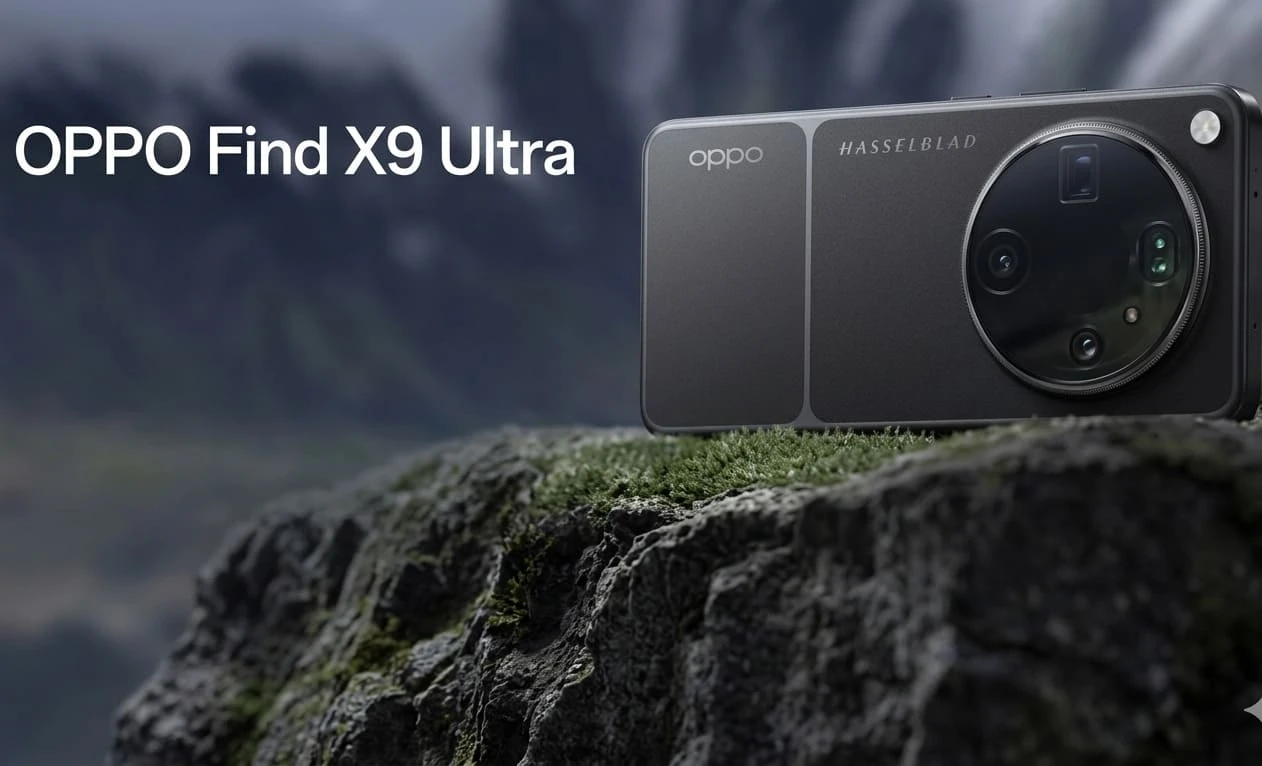
* All product/brand names, logos, and trademarks are property of their respective owners.
The smartphone camera race keeps getting more intense every year, and Oppo has been quietly pushing boundaries with its flagship lineup. With the upcoming Oppo Find X9 Ultra, the focus is once again heavily on camera performance — not just in terms of megapixels, but in how those specs translate into real photography.
If you’re curious about what this device brings to the table, this guide breaks down the Oppo Find X9 Ultra camera specs in a way that actually makes sense. Instead of just listing numbers, we’ll look at what those specs mean for everyday use — from zoom and low-light shots to video recording and overall image quality.
| Camera | Specs |
|---|---|
| Main camera | 200MP wide, f/1.5, 84° FOV, AF, 2-axis OIS |
| Ultra-wide camera | 50MP, f/2.0, 123° FOV, AF |
| Telephoto camera | 200MP, f/2.2, 34° FOV, AF, 2-axis OIS |
| Ultra-telephoto camera | 50MP, f/3.5, 11° FOV, AF, 2-axis OIS |
| Extra sensor | 3.2MP monochrome, f/2.4 |
| Front camera | 50MP, f/2.4, 90° FOV, AF |
| Rear video | Up to 8K at 30fps, 4K up to 120fps, Dolby Vision support |
| Front video | Up to 4K at 60fps |
| Zoom | Up to 10x optical zoom and up to 30x digital zoom in video specs; Oppo also markets a 50MP 10x optical telephoto with up to 120x digital zoom on the product page |
| Camera branding | Hasselblad co-developed a camera system |
On paper, the Oppo Find X9 Ultra clearly leans into serious camera hardware. The biggest headline is the dual 200MP setup, backed by a separate 50MP ultra-wide and a 50MP ultra-telephoto option, which gives the phone far more flexibility than a typical flagship. Oppo’s official product pages also highlight Hasselblad tuning, 8K video recording, and a 10x optical zoom focus, showing that this phone is being positioned as a camera-first flagship rather than just another premium Android device.

At the heart of the setup is a 200MP main camera, designed to deliver high-detail images and improve performance in challenging lighting conditions. While the megapixel count sounds impressive on its own, what really matters is how this sensor processes light, color, and dynamic range.
With a wide aperture and optical image stabilization (OIS), this sensor is expected to capture more light, reduce blur, and maintain clarity even in handheld shots. Oppo’s partnership with Hasselblad also suggests a strong focus on color accuracy and natural tones, rather than overly processed images.
In practical terms, this camera is built to handle a wide range of situations without requiring frequent lens changes. It acts as the most reliable and versatile option in the entire system.
In everyday use, the main camera is likely to be the one you rely on most. In daylight, it should produce highly detailed photos with balanced colors and strong contrast, making it suitable for everything from casual shots to more serious photography.
Overall, the main camera isn’t just about resolution — it’s designed to deliver consistent, reliable results across almost every scenario.
The Oppo Find X9 Ultra includes a 50MP ultra-wide camera, built to capture more of the scene without needing to step back. With a wider field of view, it’s designed for situations where a standard lens simply can’t fit everything in.
Unlike many smartphones, where ultra-wide shots look noticeably different, Oppo aims for better consistency here. That means colors, exposure, and overall tone should stay closer to what you get from the main camera, giving a more uniform photography experience.
Ultra-wide lenses often introduce edge distortion, especially in landscapes or group photos. Oppo typically applies software correction to reduce this effect, helping keep lines straighter and subjects more natural.
At the same time, this lens is tuned to balance detail and sharpness across the frame, so images don’t look overly soft around the edges.
This camera is most useful in scenarios where space or scale matters. It works particularly well for landscapes, travel photography, and large group shots where capturing everything in one frame is important.
In lower light, ultra-wide sensors usually fall behind the main camera, but with a 50MP setup and improved processing, it should still deliver decent results in most everyday situations.

One of the biggest highlights of the Oppo Find X9 Ultra camera setup is its advanced zoom system. Instead of relying on a single telephoto lens, Oppo uses a multi-zoom approach, combining high-resolution sensors with periscope-style optics to deliver better flexibility across different zoom levels.
This setup includes both a 200MP telephoto lens and an additional ultra-telephoto lens, allowing the phone to handle everything from mid-range zoom to extreme long-distance shots more effectively than typical flagship cameras.
To understand the real value here, it helps to separate optical and digital zoom.
With a strong optical zoom range supported by high-resolution sensors, the Find X9 Ultra is designed to maintain usable quality even as you zoom further in.
In practical use, this system opens up a lot of possibilities. You can capture distant subjects like buildings, wildlife, or stage performances without physically getting closer, and still retain a good level of detail.
At moderate zoom levels, images should remain sharp and well-balanced, making it useful for travel and everyday photography. As you push toward higher zoom ranges, software enhancement and AI processing step in to maintain clarity, though some loss of detail is expected at extreme levels.
Overall, this Zoom system isn’t just about reaching farther — it’s about making Zoom more usable across a wider range of situations, which is where many smartphones still struggle.
The Oppo Find X9 Ultra is expected to feature a 50MP front camera, which puts it ahead of many flagship devices that still rely on lower-resolution selfie sensors. But beyond the numbers, what really matters is how well it handles detail, lighting, and natural skin tones.
With autofocus support, the camera should keep faces sharp even with slight movement, making it more reliable for both photos and video.
For social media and daily use, the front camera is designed to deliver a balanced and natural look rather than overly processed results. Oppo’s image tuning should help maintain realistic skin tones while still enhancing clarity.
It also performs well in common scenarios like video calls and casual content creation, where consistency is key.
Where it stands out:
In lower light, selfie cameras usually struggle, but with a high-resolution sensor and improved processing, this setup should still produce usable results in dim environments — though lighting will always play a role.
Overall, the front camera feels more aligned with how people actually use their phones today, especially for communication and content sharing.
The Oppo Find X9 Ultra doesn’t just focus on photography — it also brings strong video features that make it suitable for content creation and everyday recording. With support for high-resolution video and advanced stabilization, it aims to deliver smooth and detailed footage across different scenarios.
In real-world use, these specs translate into a more versatile video experience. Whether you're recording casual clips or creating content, the camera is built to handle motion, lighting changes, and detail more effectively.
Key advantages:
For vloggers and creators, stabilization plays a major role. Combined with AI processing, the phone should be able to reduce shakes and keep footage usable even while walking or moving.
Color tuning, especially with Hasselblad collaboration, is also expected to produce more natural-looking video compared to overly saturated output seen on some devices.

Overall, the video capabilities make the Find X9 Ultra more than just a photography-focused phone — it’s built to handle modern content creation needs as well.
Hardware is only part of the story. What really shapes the final image on the Oppo Find X9 Ultra is its camera software and image processing, especially with Oppo’s continued collaboration with Hasselblad.
Instead of relying purely on raw sensor data, the phone uses a mix of AI processing and computational photography to refine images in real time. This affects everything from color accuracy to low-light performance and portrait shots.
While the hardware captures the image, these features define how it actually looks:
These features work quietly in the background, so most users won’t need to tweak settings manually. The goal is to make photography more consistent, regardless of lighting or environment.
In real use, this means you’re more likely to get a usable shot on the first try, without needing edits afterward. Colors should look more natural, highlights less blown out, and shadows more detailed.
The Oppo Find X9 Ultra camera specs show a clear focus on pushing smartphone photography further, especially in areas like zoom, sensor resolution, and overall versatility. Instead of relying on a single strong camera, Oppo has built a system that covers multiple shooting scenarios with more flexibility.
What stands out most is how the hardware and software work together. From the 200MP main sensor to the advanced zoom setup and AI processing, the goal is to deliver consistent results across different conditions without making things complicated for the user.
For anyone looking for a camera-first smartphone, the Find X9 Ultra positions itself as a strong contender. It’s not just about having bigger numbers — it’s about having more options when capturing moments, whether they’re close up, far away, or in challenging lighting.

Feroza Arshad is a writer and content creator covering a range of subjects including news and current affairs, automobiles, sports, technology and coding, digital marketing, and Google and search trends. Her work appears across several blogs and publications. She focuses on clear, well-researched, and genuinely useful writing — breaking down developments, reviewing products, and explaining technical topics in plain language anyone can follow.
Be the first to share your thoughts
No comments yet. Be the first to comment!
Share your thoughts and join the discussion below.