
* All product/brand names, logos, and trademarks are property of their respective owners.
A sudden earthquake sent waves of panic across Islamabad and Rawalpindi, forcing residents to rush out of their homes, offices, and shops within seconds. The tremors, felt across multiple areas of the twin cities, caught people off guard and created scenes of confusion as families gathered outside in fear.
Many described the shaking as strong enough to make buildings sway, prompting immediate evacuations. As the Islamabad Rawalpindi earthquake unfolded, people turned to phones and social media to check on loved ones and understand what had just happened.
While the tremors lasted only a short time, the fear they triggered was intense, with streets quickly filling up as residents chose safety over uncertainty indoors.
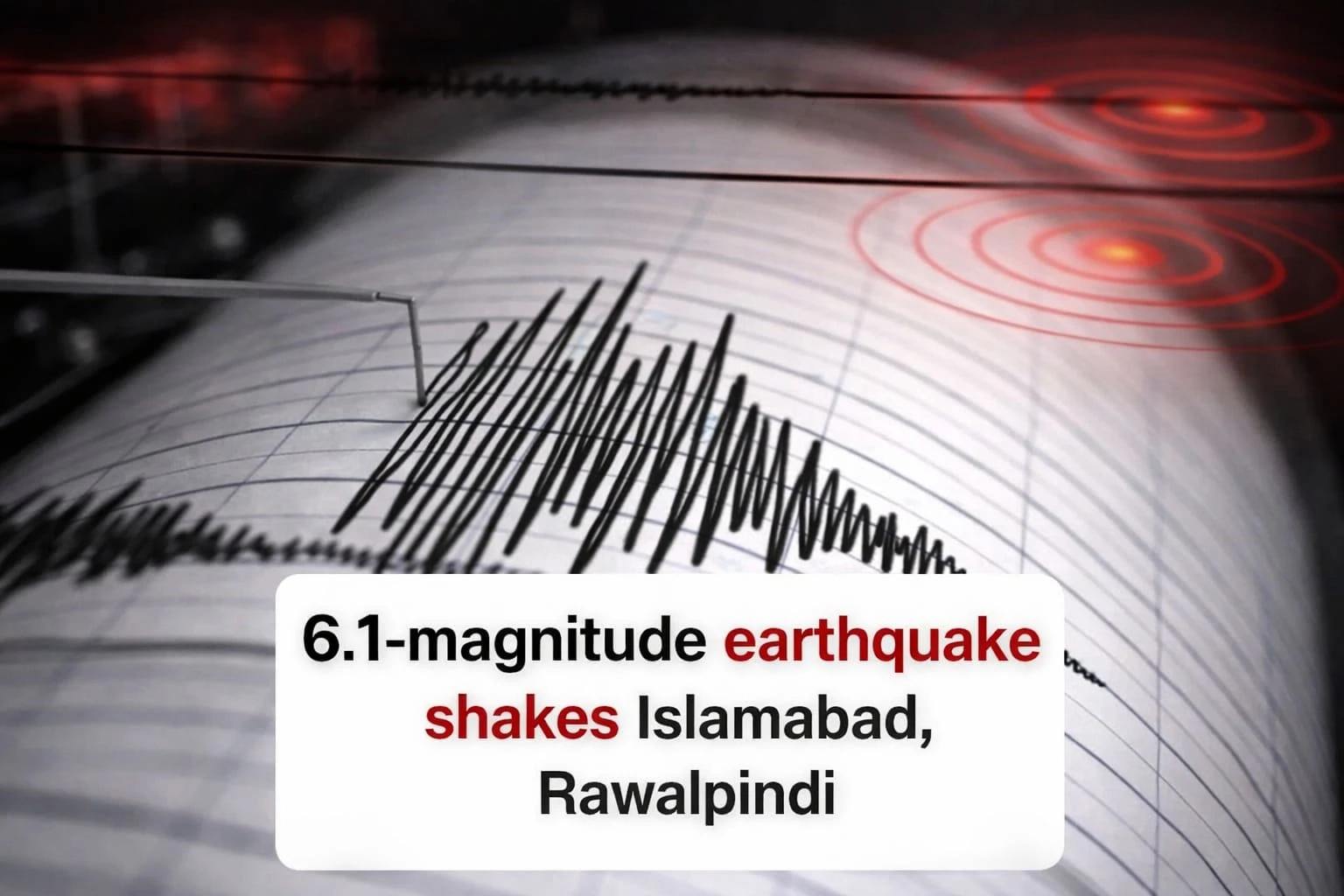
A strong earthquake was felt across Islamabad and Rawalpindi on the night of April 3, 2026, with residents in the twin cities reporting noticeable shaking in homes, apartments, and commercial buildings. According to the Pakistan Meteorological Department’s National Seismic Monitoring Centre, the quake measured 6.1 magnitude, struck at 9:13 pm, and had a depth of 190 kilometres. The epicentre was reported in the Hindu Kush region of Afghanistan, which helps explain why the tremors were felt across a wide area of Pakistan.
The shaking was not limited to Islamabad and Rawalpindi. Reports said the tremors were also felt in parts of Punjab, Khyber Pakhtunkhwa, Azad Jammu and Kashmir, and Gilgit-Baltistan, adding to the sense of alarm as people tried to understand how widespread the earthquake was. Early reporting indicated that the tremors were strong enough to send many residents rushing outside within moments.
Within seconds of the tremors, the normal routine turned into chaos across the twin cities. People rushed out of homes, apartment buildings, offices, and shops, many without even stopping to grab essentials.
In several areas, families gathered in open spaces, streets, and parking lots — choosing safety outside over the uncertainty inside shaking buildings.
Eyewitness accounts followed a similar pattern:
The most striking scenes came from densely populated neighborhoods, where dozens — sometimes hundreds — of people poured out onto the streets at the same time. Some were on phone calls trying to reach loved ones, while others stood silently, waiting to see if more tremors would follow.
Moments like these highlight how quickly earthquakes disrupt daily life — even when they last only a few seconds.
The earthquake was felt across multiple parts of Islamabad and Rawalpindi, with residents from both central and surrounding areas reporting noticeable tremors.
In the capital, people from several sectors experienced the shaking, including:
Both residential and commercial zones reported similar experiences, with people stepping बाहर almost immediately after feeling the tremors.
In Rawalpindi, the impact was just as widespread, especially in:
High-rise buildings and apartment complexes in particular saw quick evacuations, as residents preferred to move to open spaces.
Beyond the twin cities, tremors were also reported in:
This wide coverage reflects the strength and depth of the earthquake, even though the epicenter was located far from the cities themselves.
As of the latest available updates, there have been no immediate reports of major damage or casualties in Islamabad or Rawalpindi following the earthquake.
Authorities and local monitoring agencies have not confirmed any structural collapses or serious injuries, which is a positive sign considering the intensity of the tremors felt across the region.
However, initial situations like this often develop over time. Minor incidents — such as:
may still be reported as assessments continue.
Emergency services remain on alert, and any significant updates regarding damage or injuries are expected to be communicated through official channels.
Following the earthquake, official agencies began monitoring the situation closely to assess its impact and reassure the public.
The Pakistan Meteorological Department (PMD) confirmed the earthquake’s magnitude, depth, and epicenter shortly after the tremors were felt. According to their initial assessment, the quake originated in the Hindu Kush region — an area known for frequent seismic activity that often affects parts of Pakistan.
Emergency response authorities, including local administration and disaster management units, have remained on alert. However, as of now:
Officials typically advise residents to stay calm, avoid spreading unverified information, and rely on trusted sources for updates. In situations like this, timely communication from authorities plays a key role in preventing panic and ensuring that people respond safely and responsibly.
The earthquake that shook Islamabad and Rawalpindi may have lasted only moments, but it left a strong impact on residents across the region. From people running out of homes to streets filling within seconds, the incident was a reminder of how sudden and unpredictable such events can be.
While there are no reports of major damage so far, staying alert and prepared remains important. Keeping track of official updates and knowing basic safety steps can make all the difference if similar situations arise again.
For now, the situation appears under control — but awareness and readiness are key.

Feroza Arshad is a writer and content creator covering a range of subjects including news and current affairs, automobiles, sports, technology and coding, digital marketing, and Google and search trends. Her work appears across several blogs and publications. She focuses on clear, well-researched, and genuinely useful writing — breaking down developments, reviewing products, and explaining technical topics in plain language anyone can follow.
When patience runs out and diplomacy fails, the guns speak.Pakistan's most consequential military op
2 May 2026
Pakistan’s electricity crisis in 2026 is no longer just a headline — it’s part of
15 April 2026
Tension in the Middle East has a way of spreading far beyond the front lines. Even in places that ap
10 April 2026
Be the first to share your thoughts
No comments yet. Be the first to comment!
Share your thoughts and join the discussion below.


